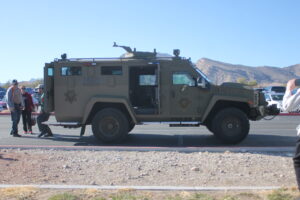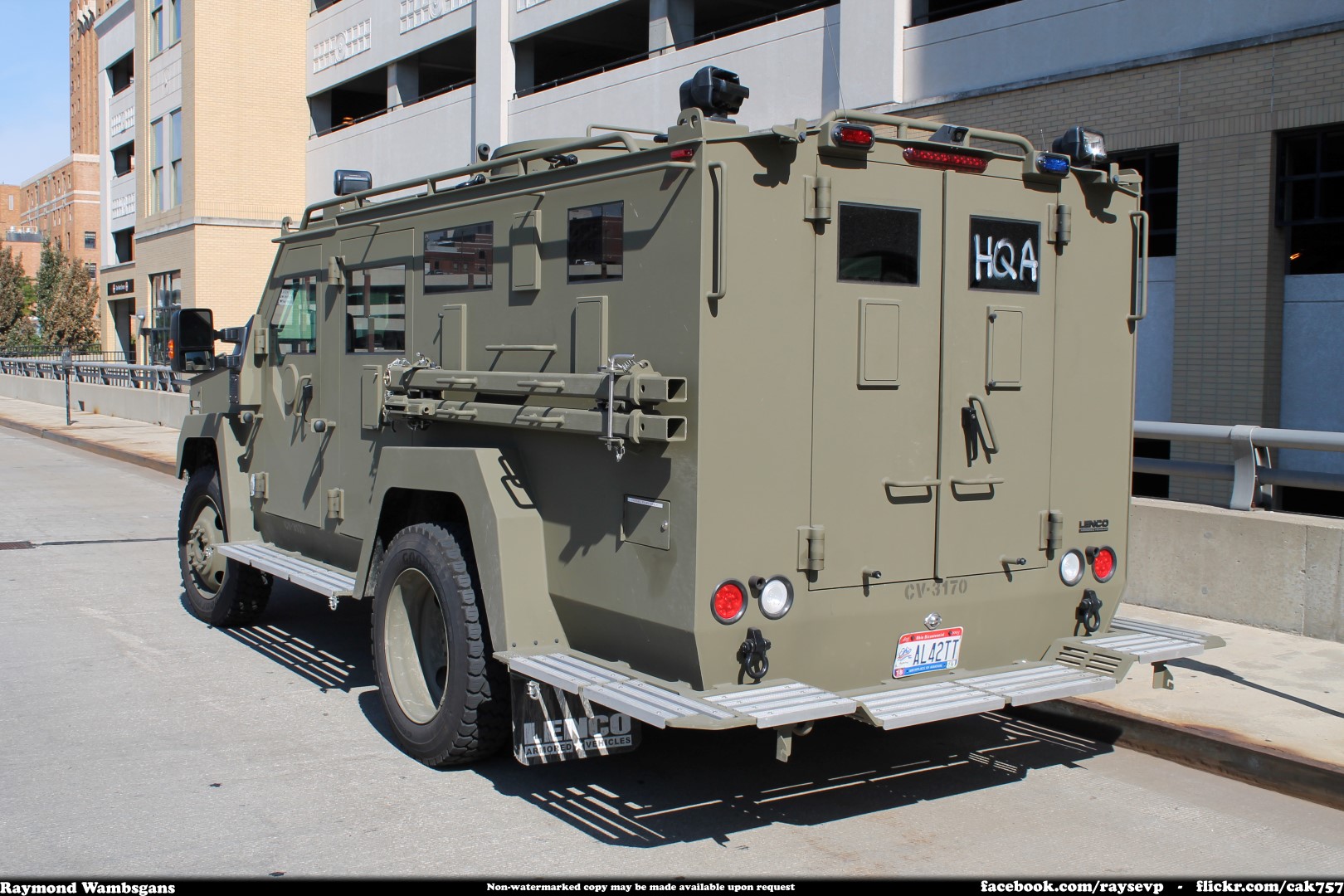
Featured photograph: Lenco BearCat G2 photographed September 18, 2015. Historical example; equipment and configuration vary. Photo: Raymond Wambsgans, via Wikimedia Commons, CC BY-SA 2.0. Shown without cropping; no endorsement implied.
The Lenco BearCat G2 and Terradyne GURKHA MPV belong on the same armored-rescue-vehicle shortlist. The useful comparison starts with the configuration an agency can actually order, the space its personnel and equipment need, and the support arrangements behind the vehicle. A photograph or maximum seating figure cannot settle those questions.
Our assessment is a document-based procurement comparison, not a road test or independent protection evaluation. Manufacturer pages were reviewed on October 24, 2026. Neither model page identifies one fixed vehicle model year, so the specifications below describe the advertised product families rather than a guaranteed 2026 build.
What the manufacturers currently disclose
| Item | BearCat G2 | GURKHA MPV |
|---|---|---|
| Advertised seating | 10–12 equipped personnel | Up to 13 occupants |
| Door description | Two- and four-door variants | Six-door configuration advertised |
| Published drivetrain | Turbo-diesel V8; four-wheel drive | 6.7-liter turbo-diesel V8; four-wheel drive |
| Purchase price | Current configuration-specific quote needed | Current configuration-specific quote needed |
| Payload and dimensions | Confirm for completed build | Confirm for completed build |
These entries come from Lenco’s G2 page and Terradyne’s MPV page. Door-count conventions and seating layouts should be clarified in the drawings supplied with each proposal. Treat the figures as prompts for a specification review, not proof that one vehicle carries more of your particular load.
Compare the cabin with the same load list
Ask both vendors to work from one inventory: the intended seated occupants, their issued equipment, medical bags, communications hardware and secured storage. Request a drawing that shows the proposed seats and storage together. An advertised maximum capacity may describe a different arrangement from the one in a department’s quote.
For a useful demonstration, have a representative group assess ordinary entry, seating comfort, restraint fit, visibility and access to approved storage with the vendor present. Record observations against the same checklist. These are evaluation suggestions, not findings about either vehicle. We have not measured cabin space or conducted an ergonomics trial.
The engine needs a build-sheet answer
A real procurement record illustrates why the product name alone is insufficient. A Terradyne quote dated December 19, 2025, posted by Collin County describes a Ford F-550-based MPV with a 7.3-liter gasoline engine, whereas the current public MPV page highlights diesel. That is evidence of a configuration difference, not a reason to assume every MPV uses either engine.
Specify the chassis model year, engine, transmission and applicable emissions configuration in the request for quotation. Fleet staff should evaluate compatibility with their existing service arrangements and fuel purchasing. Neither a shared commercial chassis nor a familiar engine establishes that every local dealer can service the completed armored vehicle.
Protection claims require comparable documentation
Both manufacturers market protective vehicles, but their public descriptions do not constitute a matched comparative test. We are not assigning a protection winner from marketing labels. Ask for documentation applicable to the exact quoted configuration and have the agency’s qualified technical reviewers assess it against its approved requirements.
Keep the review separate from photographs of optional accessories. The delivered specification, contractual acceptance criteria and supporting documents should agree. If a vendor uses several standards or describes an optional package, obtain a written explanation of precisely what is included rather than combining different labels into a single ranking.
Use a complete quote rather than an internet price
The same Collin County document separates the MPV base vehicle, options, discount and shipping, and gives a limited quote-validity period. It is a useful example of purchasing structure, but its expired terms are not a current price offer for readers. We have deliberately avoided presenting that historical total as the cost of a new MPV today.
Request comparable totals that identify delivery, training, documentation, approved upfitting and support. Ask what remains the agency’s responsibility after arrival. Lenco lists purchasing-contract and financing routes, but procurement staff should verify current eligibility, contract scope and local purchasing requirements rather than assuming a listing completes that review.
Make service responsibility part of the comparison
A good proposal should identify who handles chassis work, who handles the armored conversion, where repairs can take place and how approval is obtained. Ask for written coverage, exclusions, parts availability and contact procedures for the exact build. Schedule a fleet-maintenance review before accepting the vehicle, not after the first service issue.
The practical conclusion is a two-vendor shortlist rather than a universal winner. Choose between the G2 and MPV using matched configuration drawings, documented requirements, delivered cost and a credible support plan. Where those answers remain missing, the comparison remains incomplete, regardless of which vehicle looks more impressive in a brochure.