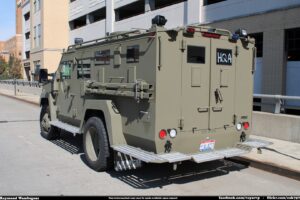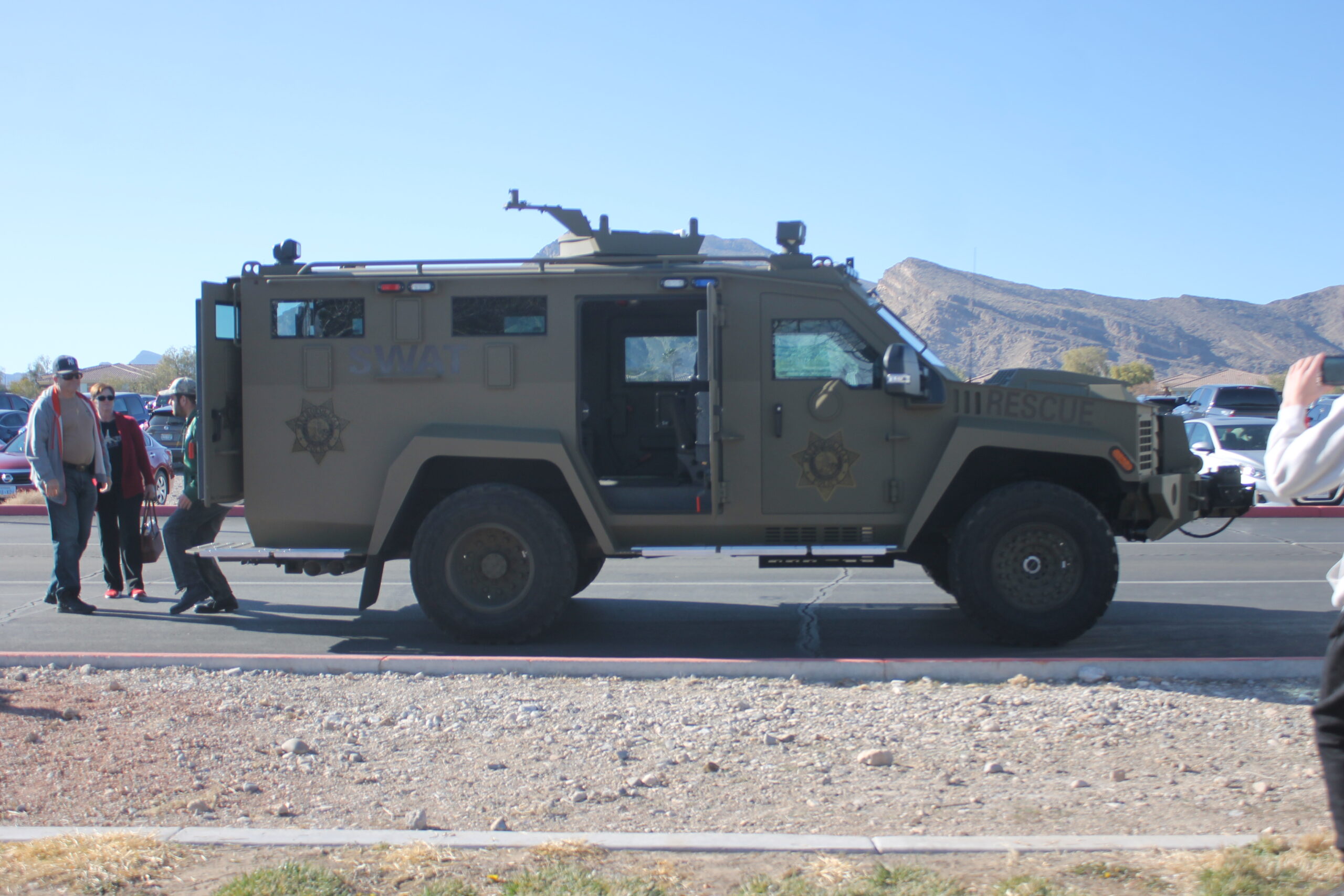
Featured photograph: Las Vegas Metropolitan Police BearCat G3 at a public display, January 11, 2020. Historical agency configuration, not a current factory specification. Photo: Noah Wulf, via Wikimedia Commons, CC BY-SA 4.0. Resized for the web without cropping; no endorsement implied.
The BearCat G3 should be considered when an agency has a documented reason to evaluate Lenco’s upgraded off-road chassis package. The G2 remains the relevant baseline. A higher model number, by itself, does not establish that the G3 is the right replacement for every G2 or that it will cost less to own.
This is a procurement comparison of current manufacturer descriptions, checked October 24, 2026. We have not driven either vehicle, measured clearance or compared operating costs. Lenco’s model pages do not attach their descriptions to a specific chassis model year; a purchase specification needs that detail from the vendor.
The central difference is the chassis package
Lenco describes the G3 as beginning with the G2 and adding a heavier-duty suspension, off-road wheel-and-tire equipment and increased ground clearance. That makes the G3 a configuration choice within the family, rather than evidence that the G2 has been discontinued. Both retain their own current product pages.
| Comparison point | BearCat G2 | BearCat G3 |
|---|---|---|
| Product positioning | Baseline configuration with shortened reinforced chassis | G2-derived configuration with off-road upgrades |
| Suspension and wheel package | Confirm quoted components | Upgraded suspension and off-road package described |
| Seating advertised | 10–12 equipped personnel | 10–12 equipped personnel |
| Door variants advertised | Two or four doors | Two or four doors |
| Exact clearance, completed weight and price | Written confirmation needed | Written confirmation needed |
The table draws from the G2 and G3 product pages. It does not imply that every accessory shown in manufacturer photographs is standard equipment.
Build the case from fleet records
Before requesting a G3, assemble the maintenance and transport issues the replacement is expected to address. Useful evidence could include documented clearance constraints at agency facilities, service calls involving the current wheel package, or changes in the approved fleet requirement. Do not substitute a general preference for a more rugged-looking vehicle for a measurable purchasing need.
Then ask Lenco to explain which quoted changes address each requirement. If the proposed benefit cannot be connected to a documented need or a verifiable specification, leave it unscored. This approach also gives procurement staff a clear record of why a particular configuration was chosen.
Keep the rest of the build constant
A fair G2-versus-G3 quote comparison should hold the cabin layout, communications installation, climate equipment, storage and other selected accessories constant wherever available. Otherwise, a difference attributed to the chassis package may actually come from two substantially different vehicles.
Request a line-item explanation of the changes. If a substitution is required, ask how it changes completed dimensions, weight, servicing or the delivery schedule. Avoid calculating the G3 premium by subtracting an old G2 contract price from a new, heavily optioned G3 proposal. The dates and scope would be different before the comparison even begins.
Check the building and workshop fit
Ask for the completed vehicle’s overall height, width, length and weight in its proposed configuration. Have facilities and fleet staff compare those figures with storage doors, maintenance bays and the capacities of their approved equipment. Obtain measurements that include selected equipment, not a bare chassis drawing.
The same review should address cleaning access, replacement tire handling, spare-wheel storage and the service tools a department actually possesses. These are ownership questions rather than reasons to assume either variant is difficult to maintain. A vendor demonstration and the appropriate service documentation can turn assumptions into a recorded acceptance checklist.
Parts commonality is helpful only when specific
Lenco advertises commonality across BearCat variants, but a fleet buyer needs a list of the parts relevant to its particular vehicles. Ask which service items can be shared with existing inventory and which are unique to the proposed build. Compare part numbers and approved substitutions rather than inferring interchangeability from the BearCat name.
For an agency already operating a G2, request a maintenance briefing that distinguishes familiar components from new ones. Include the relevant documentation and any required technician instruction in the proposal. We have not verified a retrofit path from an existing G2 to a G3, so this article should not be read as recommending such a conversion.
Compare ownership costs on the same timetable
Have both quotes identify acquisition cost, delivery, scheduled service assumptions, replacement wear items, training and warranty responsibilities. Use the same intended ownership period and mileage assumptions for both estimates. Where an input is unknown, show it as unknown rather than inserting an unsupported cost saving.
Lenco’s purchasing page is a starting point for contract routes, not a substitute for a current configuration-specific quote. Verify the particular contract and its eligibility with procurement staff. Older brochures and third-party price summaries can describe vehicles that are no longer equivalent to the proposed purchase.
The G3 deserves a closer look when its documented upgrades solve a defined fleet requirement. If the G2 meets that requirement, compare its quote without assuming that more equipment necessarily delivers better value. The final choice should be explainable through the build sheet and ownership plan, not the model number.